Issue · Interview
IT’S A BIRD. IT’S A BOAT. IT’S YOU.
What happens when paintings, memes, protest placards and clothes begin speaking the same language?
An Ink & Howl Cultural Investigation · India · Digital Public Square · 25 July 2026
Editor’s Note
esterday, a reel led to a phone call. The call was with Ashish Das.
We began talking about one painting.
An hour later, we were talking about birds, boats, protest signs, clothes, and why they all seemed to be speaking the same language.
That's when I realised this wasn't an artist's portfolio.
It was a conversation about the times we live in.
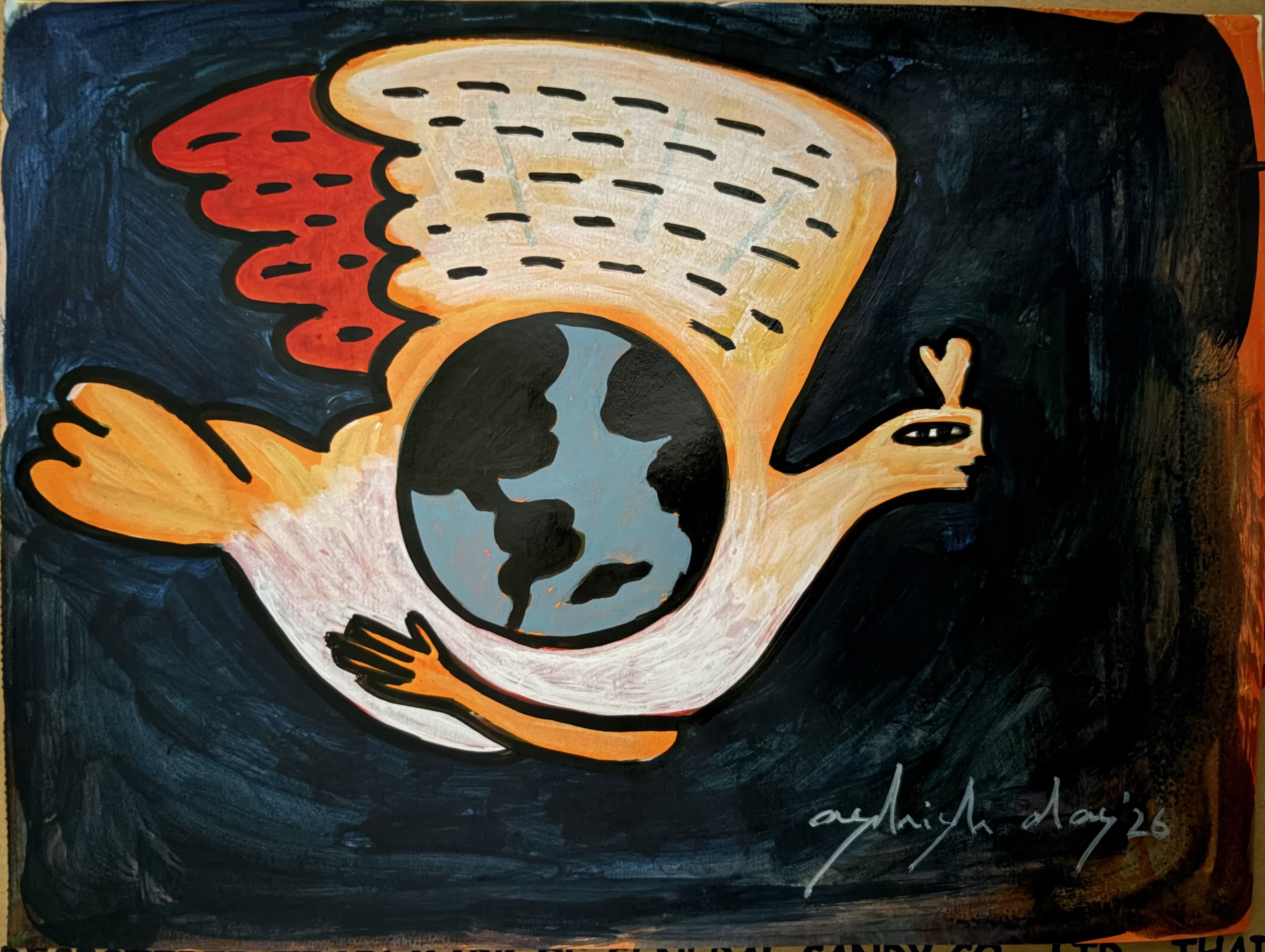
Gen Z has a phrase for moments like this: "It's giving good vibes."
It sounds wonderfully casual.
But look closer.
Those "vibes" often carry opinions, anxieties, hopes and acts of quiet resistance. Humour isn't replacing seriousness. It's become the preferred way of delivering it.
That's what makes Ashish's bird feel unexpectedly contemporary. It doesn't arrive with a manifesto. It arrives with good vibes... and leaves carrying something much heavier.
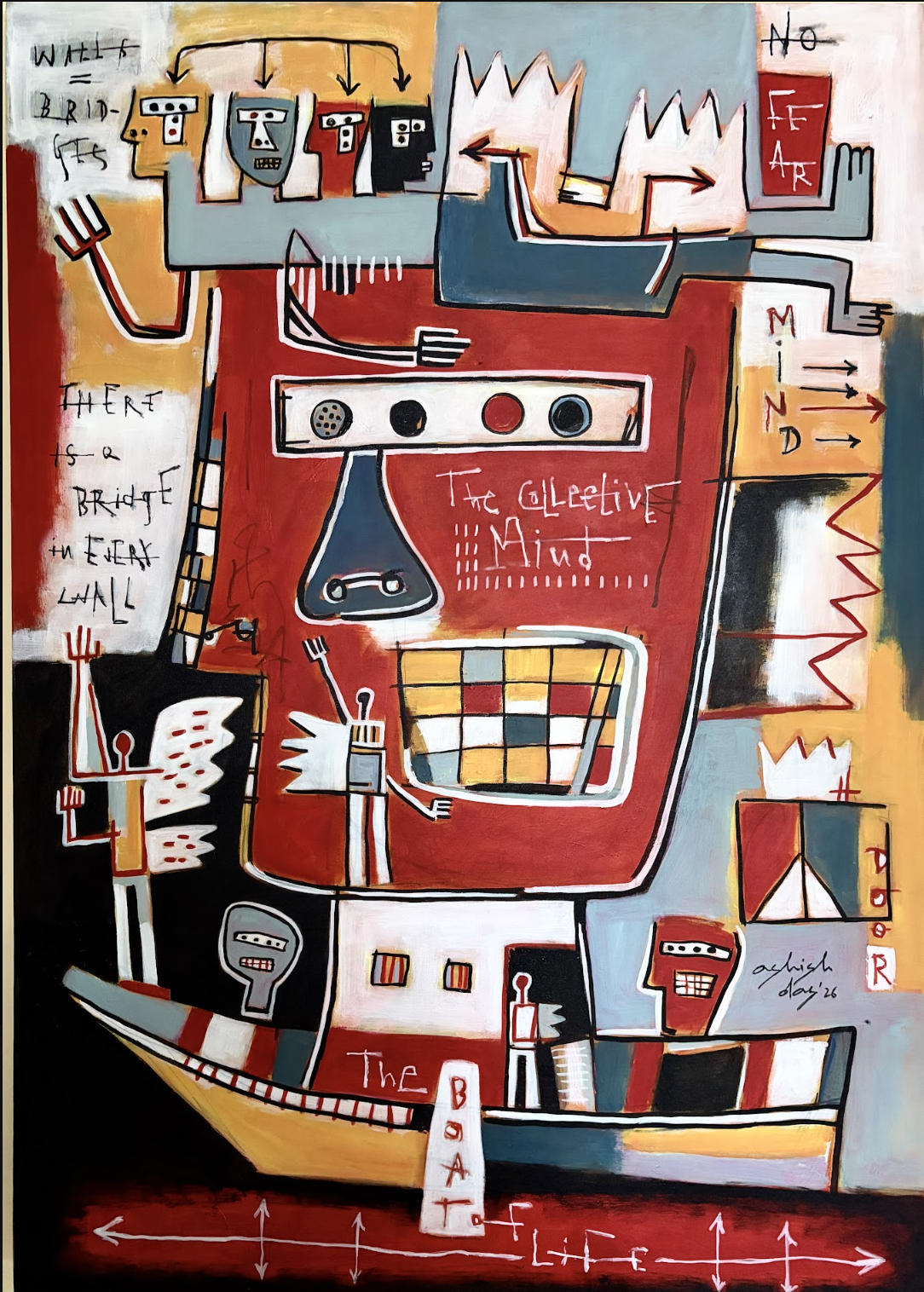
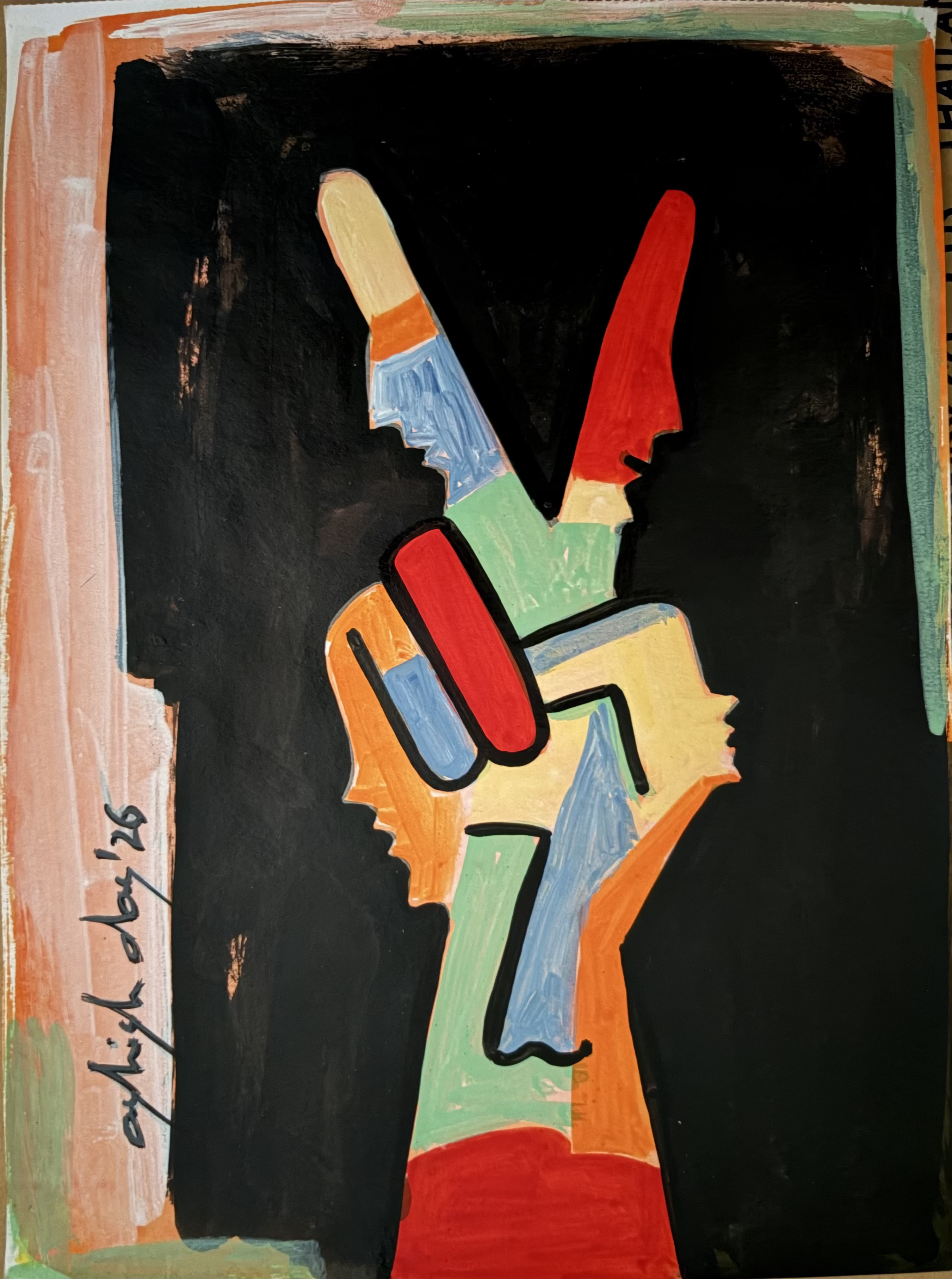
There isn't a legend explaining this painting.
There doesn't need to be.
A bird.
A face.
A fragment of colour.
Your mind begins connecting them before anyone asks it to.
Gen Z has a shorthand for moments like this.
"IYKYK."
If you know, you know.
It's more than internet slang.
It's a way of recognising people who already share the same cultural reference.
A meme works like this.
So does a protest slogan.
So does a favourite T-shirt.
Ashish paints in the same language.
He doesn't explain every symbol.
He trusts you to complete it.
That may be the biggest shift of our time.
Art is no longer a finished statement.
It has become a conversation the viewer quietly finishes.
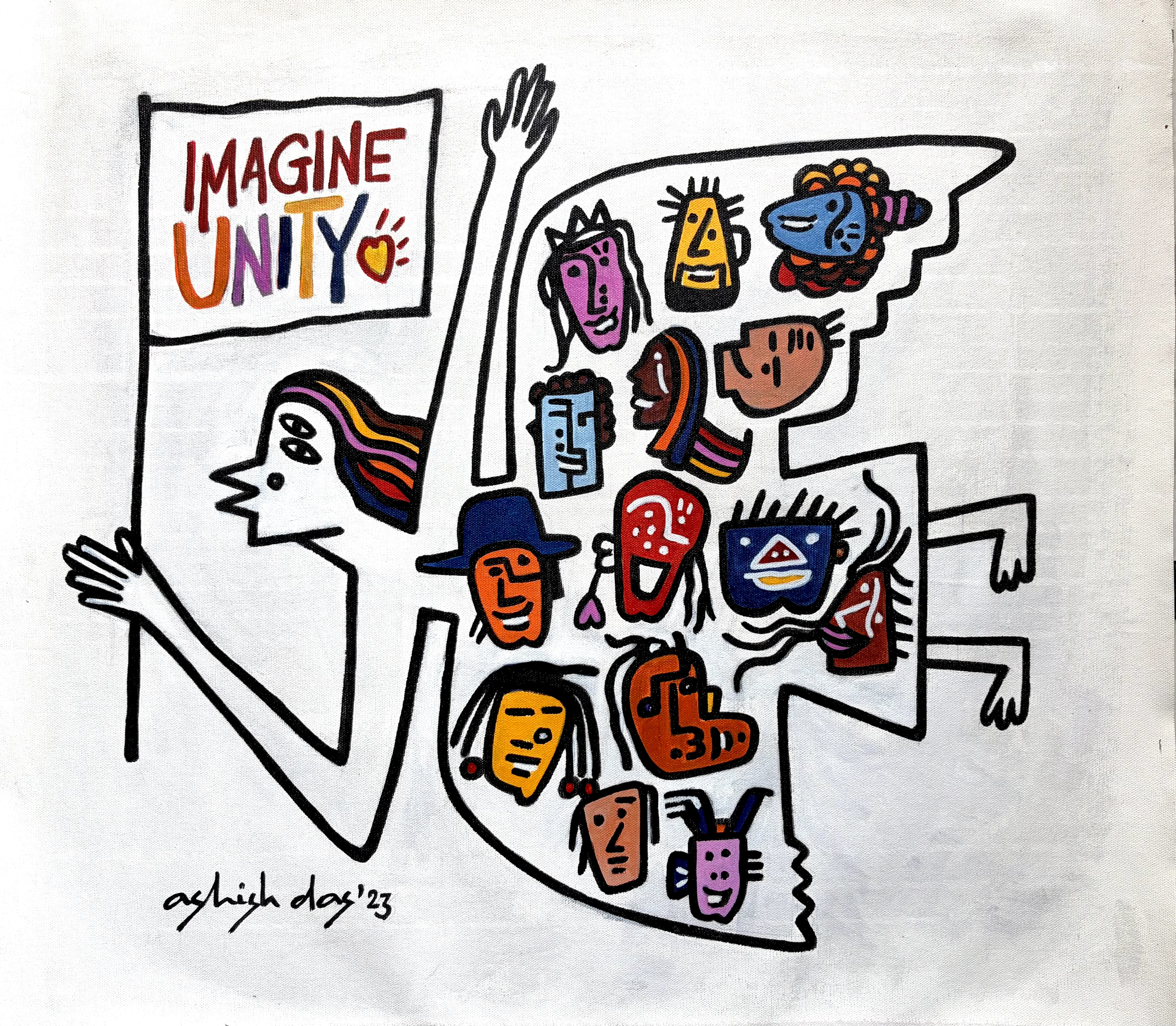
Every generation inherits a different map of the world.
Ashish imagines something quieter.
A world where difference isn't a problem waiting to be solved.
It's the starting point.
Gen Z often talks about finding "their people."
Not people who look the same.
People who get them.
That shift matters.
Communities are no longer built by geography.
They're built by shared values, shared symbols and shared stories.
That's what this painting quietly proposes.
Unity isn't everyone standing in the same place.
It's everyone choosing the same direction.
Perhaps that's why this image feels less like a dream and more like an invitation.
Not to agree.
But to belong.
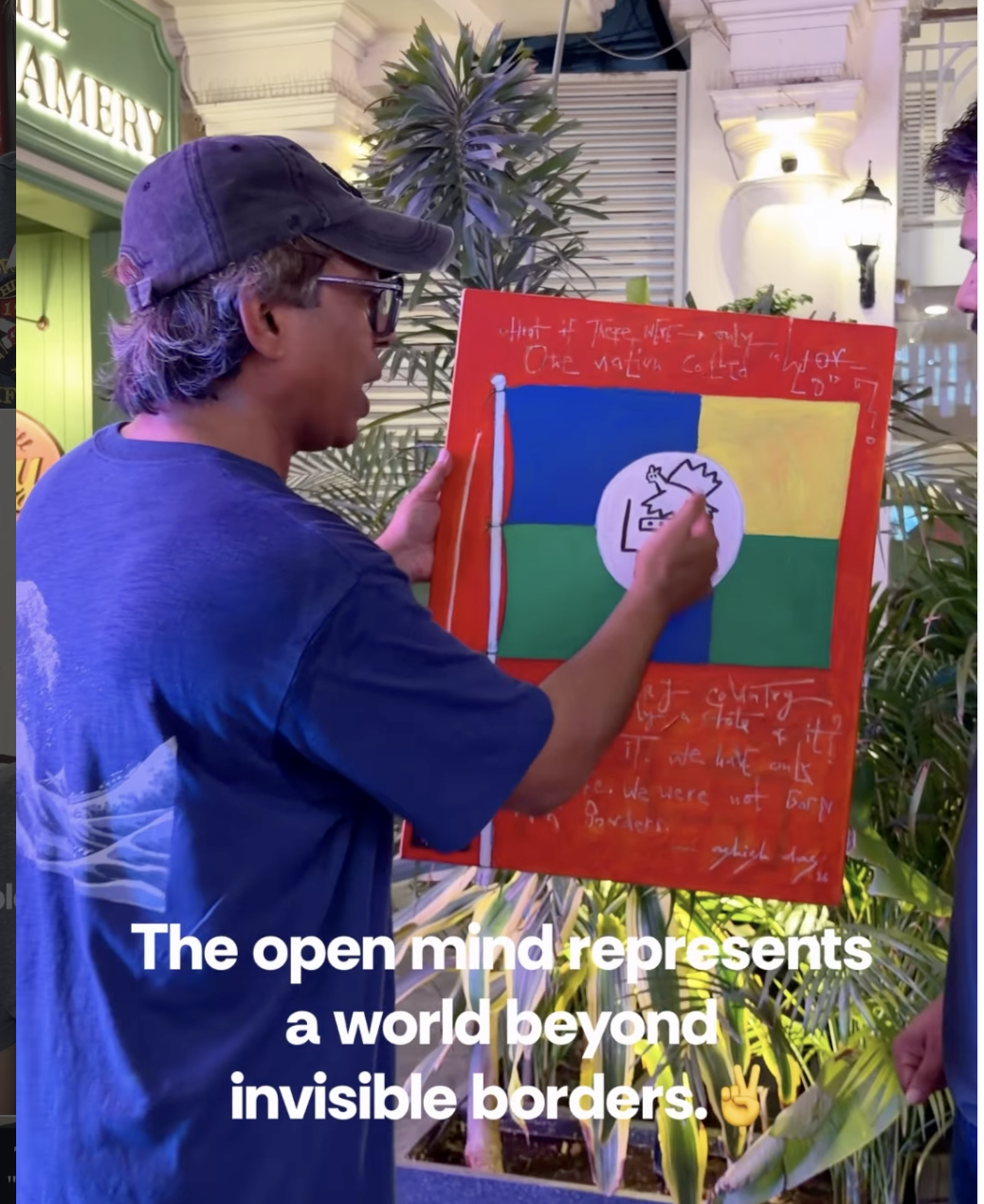
Every generation inherits a map.
Countries.
Flags.
Borders.
They help us navigate the world.
Sometimes they quietly begin to define it.
Ashish's work asks a gentler question.
What if we met each other as humans first?
Before nationality.
Before language.
Before politics.
Before the invisible borders we carry in our minds.
Perhaps the boldest idea isn't creating a new identity.
It's remembering the one we already share.
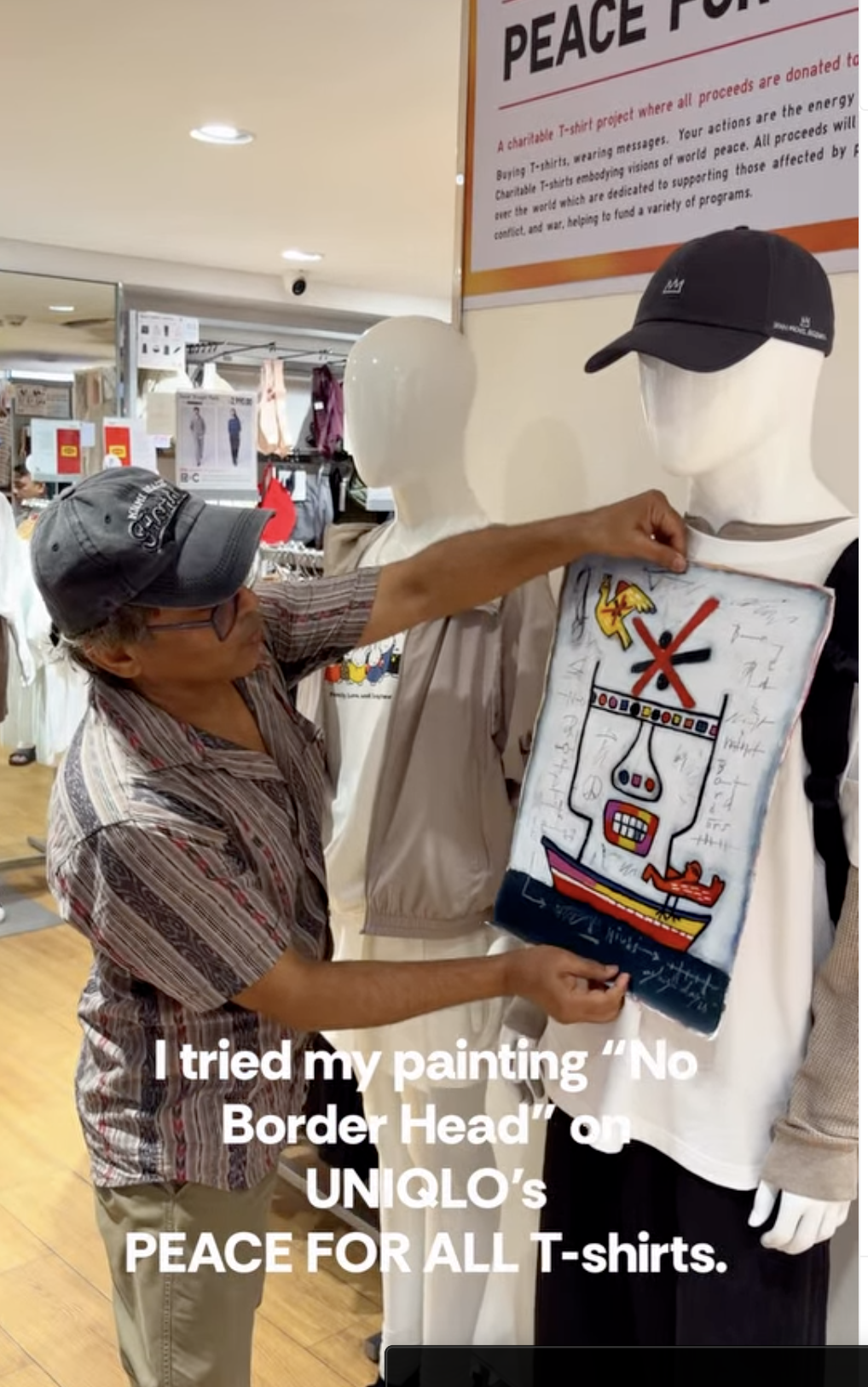
A painting can change the way we see the world.
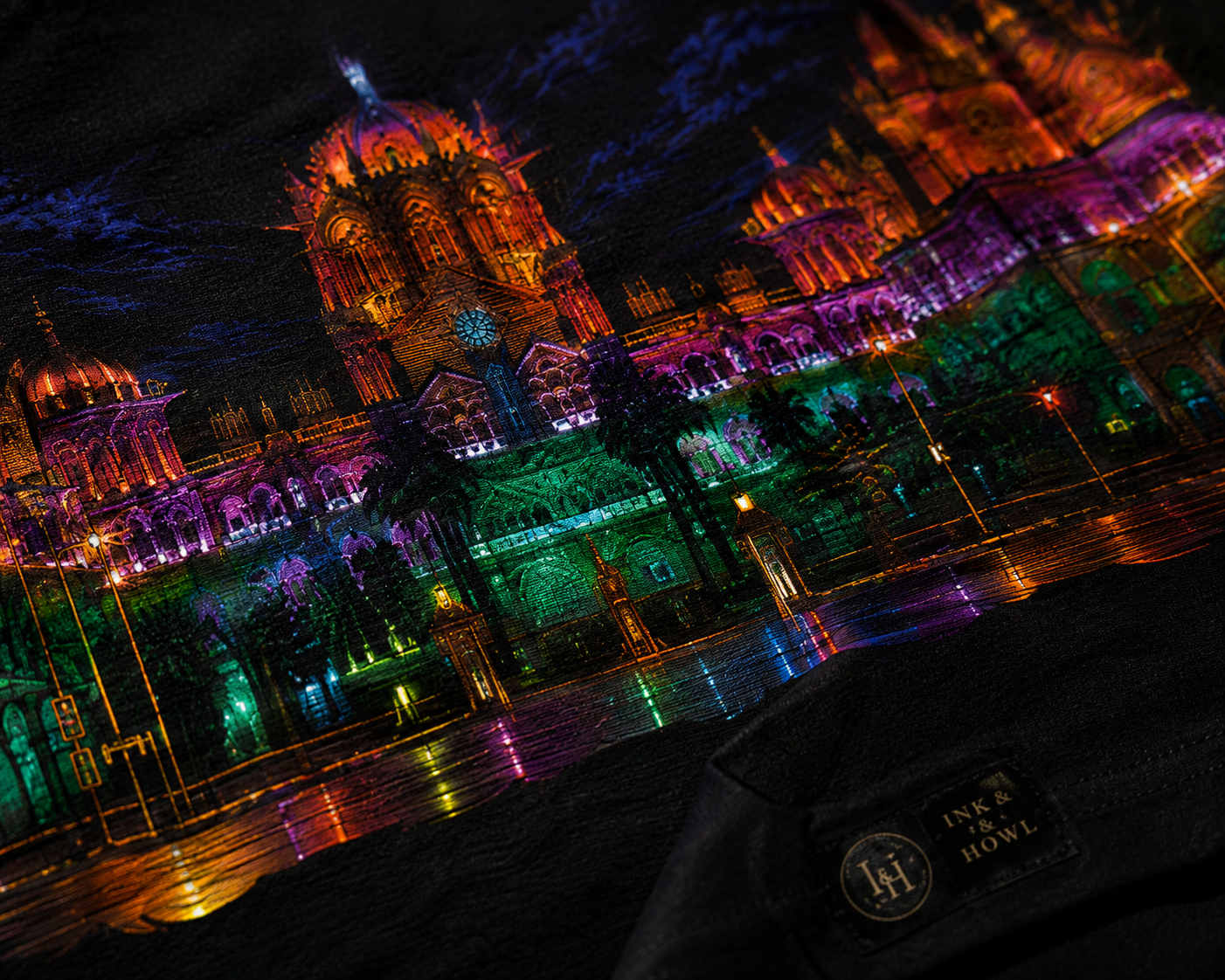
A T-shirt can change who we end up talking to.
That's the quiet leap Ashish is interested in.
His work doesn't have to stay inside a gallery to matter.
It can walk through airports.
Stand in a queue.
Share a table with strangers.
Start a conversation without saying a word.
Perhaps the most interesting clothes aren't the ones that complete an outfit.
They're the ones that begin a dialogue.
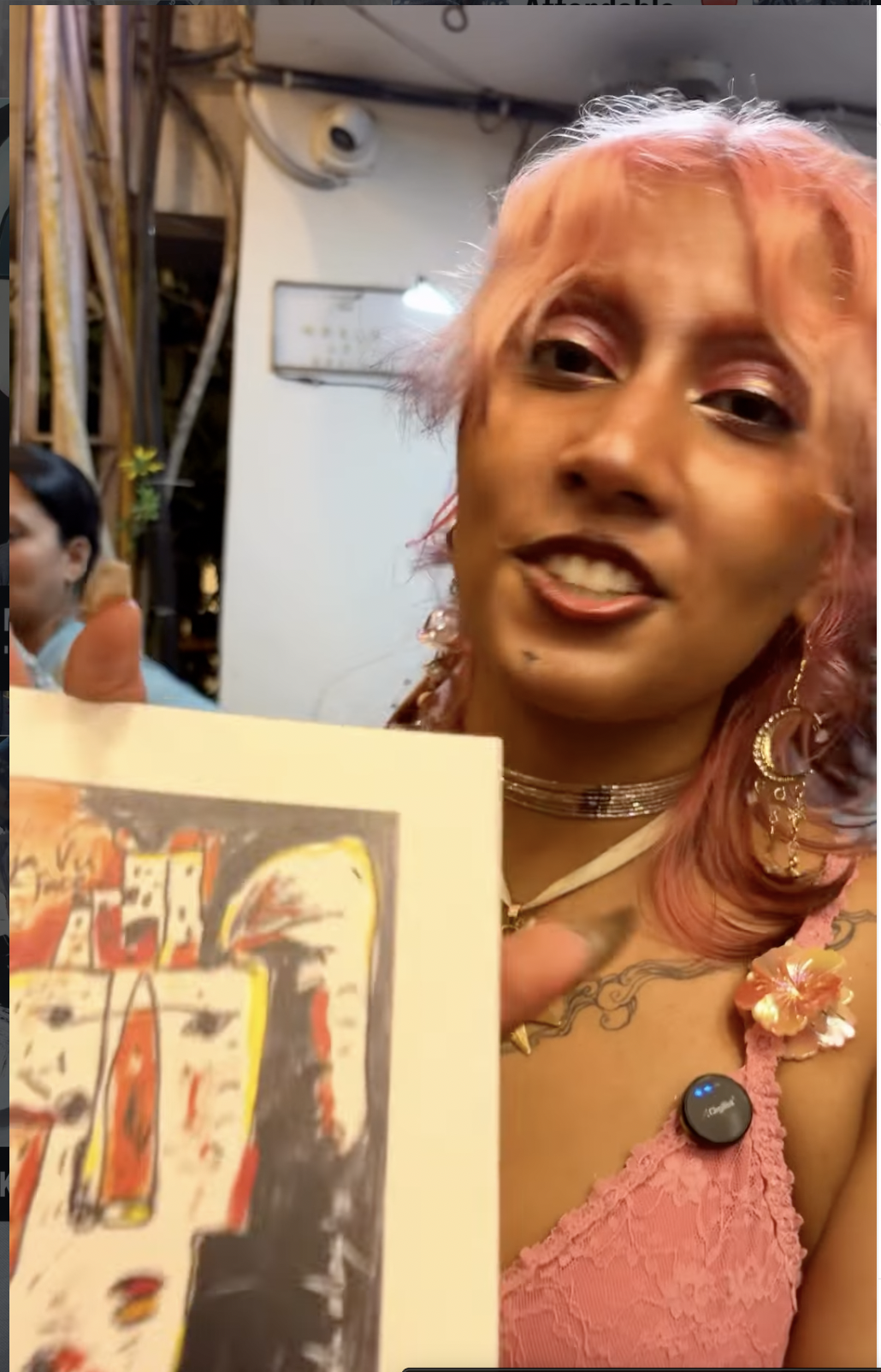
Every generation invents its own vampire.
Ours doesn't hide in castles.
It lives inside recommendation engines, outrage cycles and endless scrolling.
It feeds on attention.
Not blood.
Ashish's face doesn't frighten us because it's strange.
It frightens us because it looks familiar.
We've borrowed a lot of Gen Z vocabulary along the way.
Good vibes.
IYKYK.
Different feeds.
Human first.
Somewhere between new words and old questions, we discovered something unexpected.
Every generation invents its own dictionary.
Artists simply leave behind the illustrations.
Long after today's slang disappears, these paintings will still be understood.
Because they were never really about Gen Z.
They were always about seeing each other as humans first.
The language changes. Humanity doesn't.
Curator’s Note
Every generation leaves behind its own dictionary.
Some write books. Some build monuments. This one leaves memes, murals, placards, paintings and clothes. The medium has changed. The human need to be understood has not.
— An Ink & Howl Cultural Investigation
Engage
Reflections
What readers carried with them.
A quiet record of what this story left behind. Editors occasionally feature a selection here as a Curator’s Note.
Reading the guestbook…
Reflection Reward
Thoughtful reflections may be recognised with 5 Discovery Points at the curator’s discretion.
Time-bound
Reflection rewards may be offered during selected editorial campaigns. Dates will be announced.
Curated & Meaningful
Editors may recognise reflections that add depth, originality or meaningful perspective.
Rules are set by the curator and may change.
All reflections are reviewed by our editorial team. Only selected reflections receive points and may be featured.
Share This Discovery
INK & HOWL — DISCOVERY
A museum placard. Take it with you.
Know A Creator?
Know a creator we should meet?
Ink & Howl documents emerging makers, artists, designers and thinkers.
Nominate someone whose work deserves to be discovered.