Issue · Journal
Sharada Dwivedi: The Woman Who Taught Bombay to Remember
How one historian spent a lifetime preserving the memory of a city that was constantly reinventing itself.
JC (Jagdish Chawla) · Mumbai (Bombay), Maharashtra, India · August 2026
Editor’s Note
here are cities that grow by building higher.
Bombay grew by remembering deeper.
Long before the skyline became a race of glass towers, before old neighbourhoods disappeared behind redevelopment and reclaimed land stretched farther into the sea, there was a woman quietly collecting the city's memory. She was not chasing headlines. She was listening to forgotten streets, fading buildings, family archives, weathered maps, and stories that survived only because someone still remembered them.
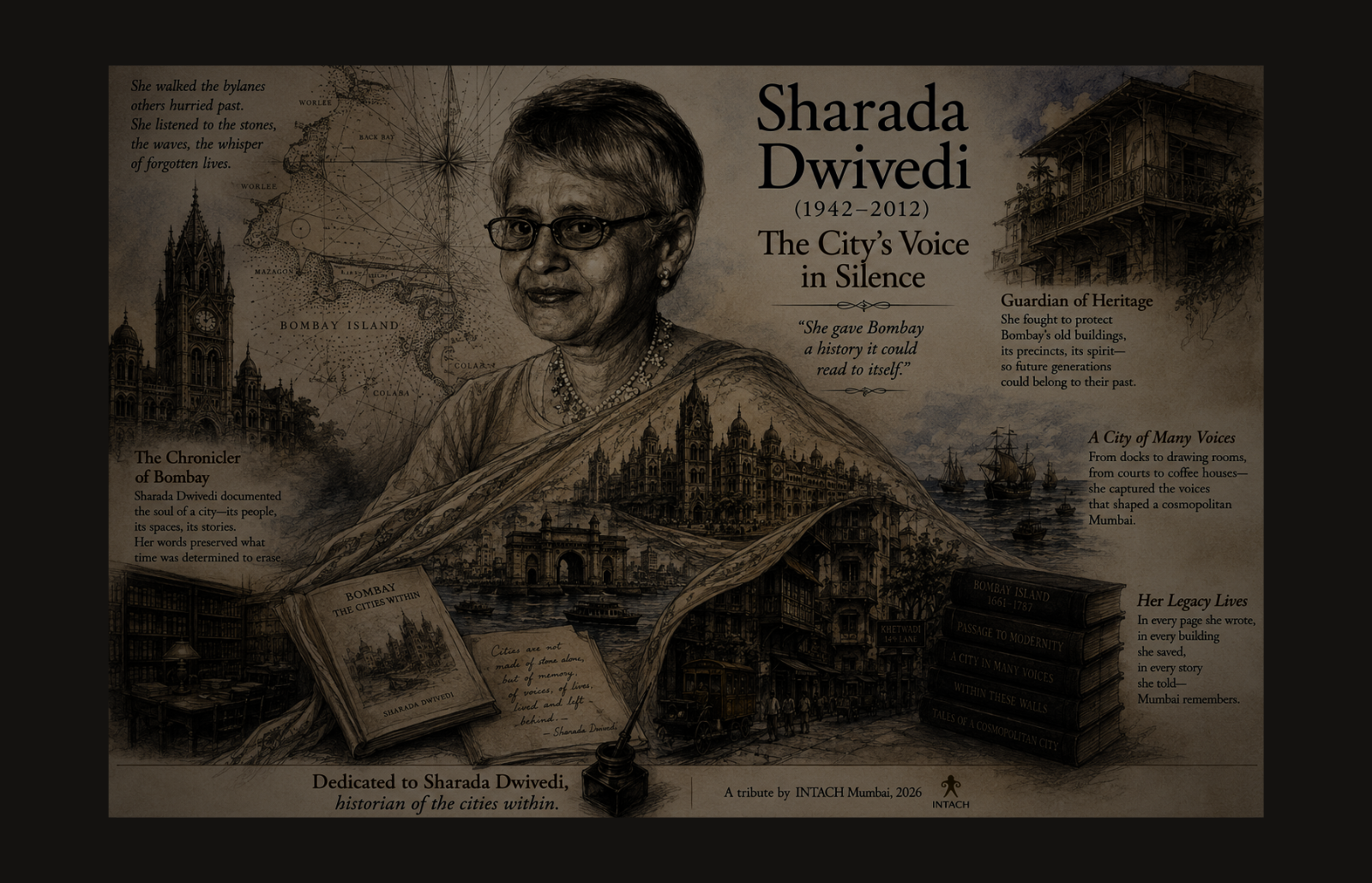
Her name was Sharada Dwivedi.
This is not merely the story of a historian. It is the story of someone who understood that when a city loses its memory, it slowly forgets itself.
The Woman Who Walked the City
Sharada Dwivedi never treated Bombay as a collection of buildings. To her, it was a living archive. Every stone carried a conversation. Every balcony hinted at another family. Every forgotten lane held the possibility of discovering a story that had escaped the official record.
As a historian, author and conservationist, she devoted decades to documenting the city's architectural heritage and cultural life. She believed that history belonged as much to ordinary streets and neighbourhoods as it did to monuments and institutions.
Her research was patient. She searched libraries, private collections and fading municipal records. She spoke with families who still remembered the Bombay of another generation. Piece by piece, she assembled a portrait of the city that no single archive could have preserved alone.
## The Books That Became the City's Memory
Sharada Dwivedi believed that history should not remain locked inside academic journals. It should be walked, read, argued over and experienced by everyone who called the city home.
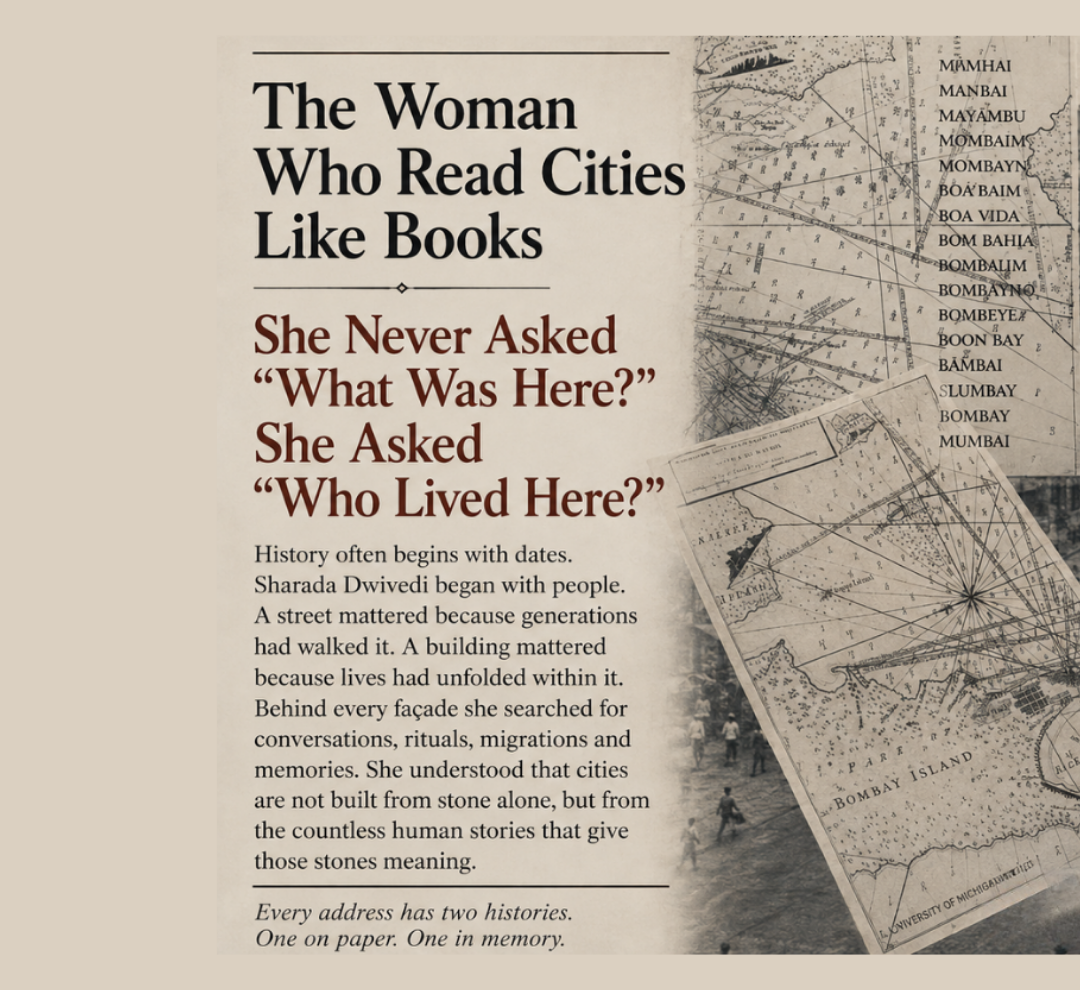
Among her most celebrated works is Bombay: The Cities Within, co-authored with Rahul Mehrotra. More than a history book, it became a map of Bombay's layered identity. It revealed that the city was never a single place but many cities growing into one. Portuguese villages, colonial precincts, bustling bazaars, textile districts and fishing communities all survived within the same urban fabric.
Readers discovered that Bombay could not be understood by looking only at its skyline. They had to look at its courtyards, staircases, markets, docks and forgotten neighbourhoods. They had to slow down.
Her writing transformed ordinary walks into acts of discovery. Buildings that thousands passed every day suddenly carried new meaning. A carved balcony, an old cinema façade or an iron staircase became evidence of lives that had shaped the city long before the present moment.
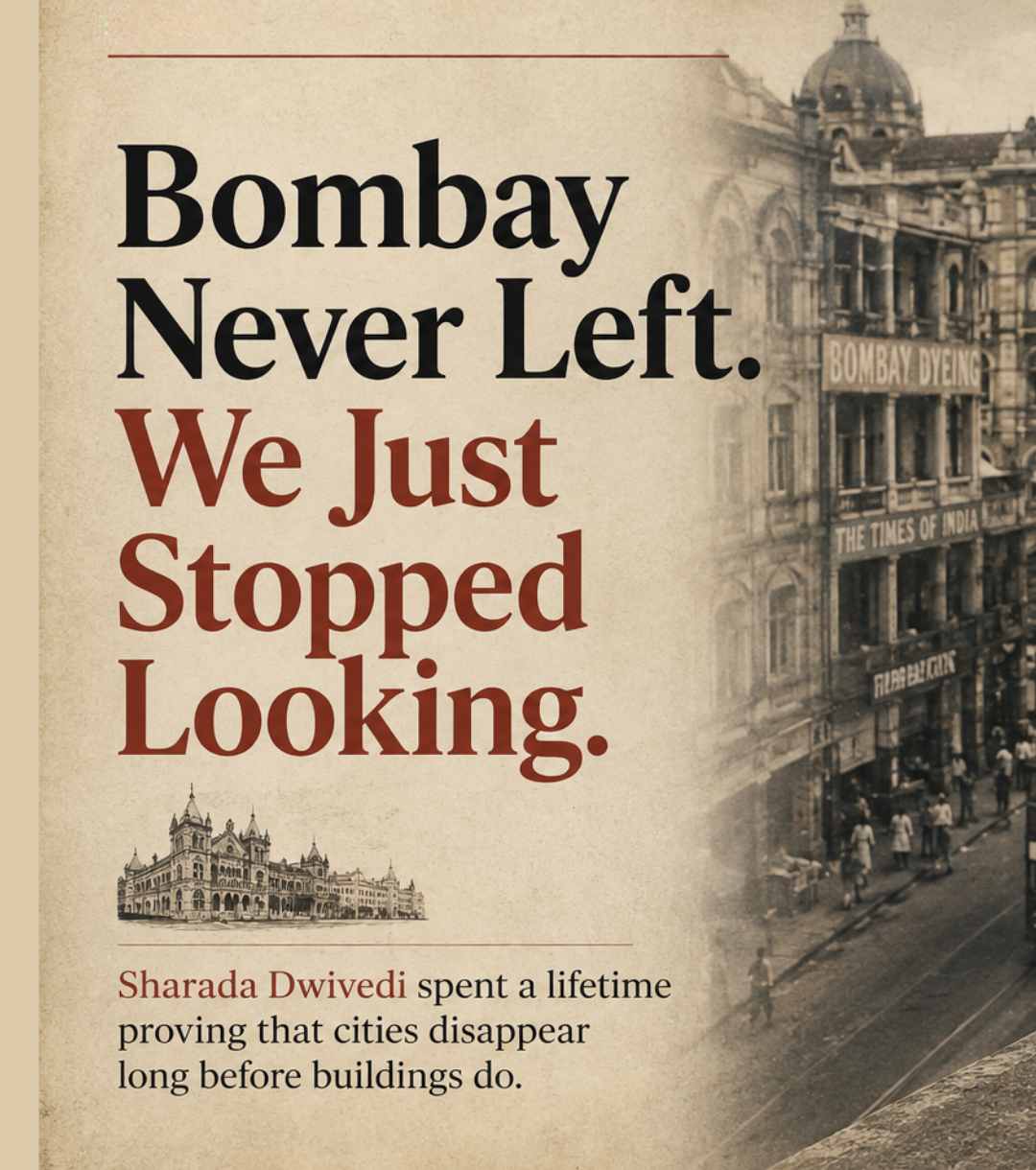
Cities rarely disappear overnight. They fade one unnoticed detail at a time. A carved balcony is replaced. A street changes its name. A family photograph is forgotten in a drawer. By the time we notice what has been lost, the city has already become a different place. Sharada Dwivedi devoted her life to slowing that disappearance, teaching generations that memory is as essential to a city as its foundations.
Before Bombay became a metropolis, it was a gathering of worlds. Koli fishing villages, Portuguese settlements, colonial precincts, trading ports and neighbourhoods shaped by migrants all left their imprint on the city. Sharada Dwivedi revealed that Bombay could never be understood as a single place. It was a conversation between communities, centuries and cultures, each adding another layer without completely erasing the one before it.
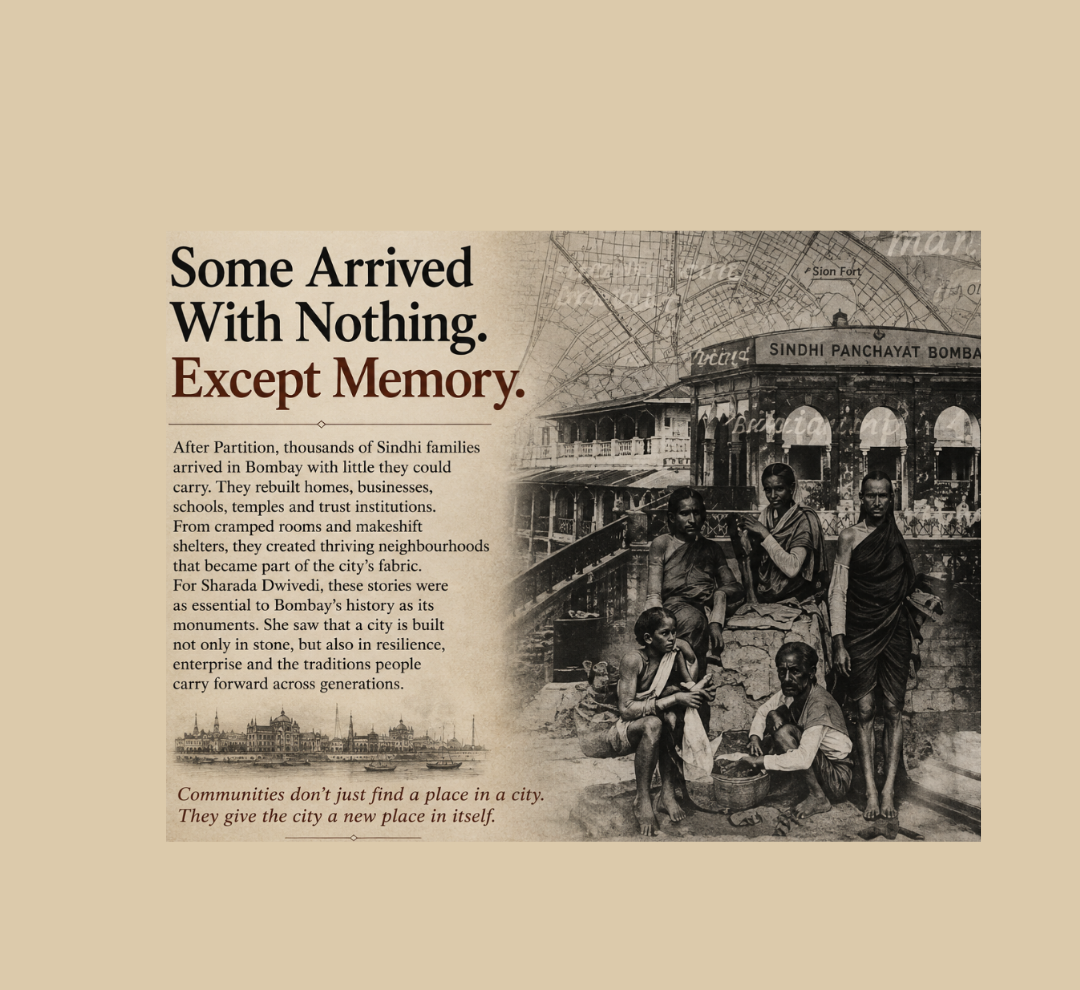
Some Arrived With Nothing. Except Memory.
When Partition divided the subcontinent, thousands of Sindhi families left behind homes, businesses, streets and a homeland they believed would always be theirs. Many came towards Bombay and its surrounding settlements carrying little more than documents, photographs, recipes, prayers and the names of places they might never see again.
They rebuilt their lives through shops, workshops, schools and new neighbourhoods. But rebuilding did not mean forgetting. Sindh survived in the language spoken at home, in food prepared from memory, in songs, ceremonies and stories repeated so children would know where their families had begun.
Their arrival became another chapter in Bombay’s layered identity. The city did not merely give them shelter. They changed its markets, its enterprise and its cultural life. They carried a lost geography into a new one and made memory a form of belonging.
Sharada Dwivedi’s work helps us see that a city is shaped not only by those born within it, but also by those who arrive carrying another city inside them.
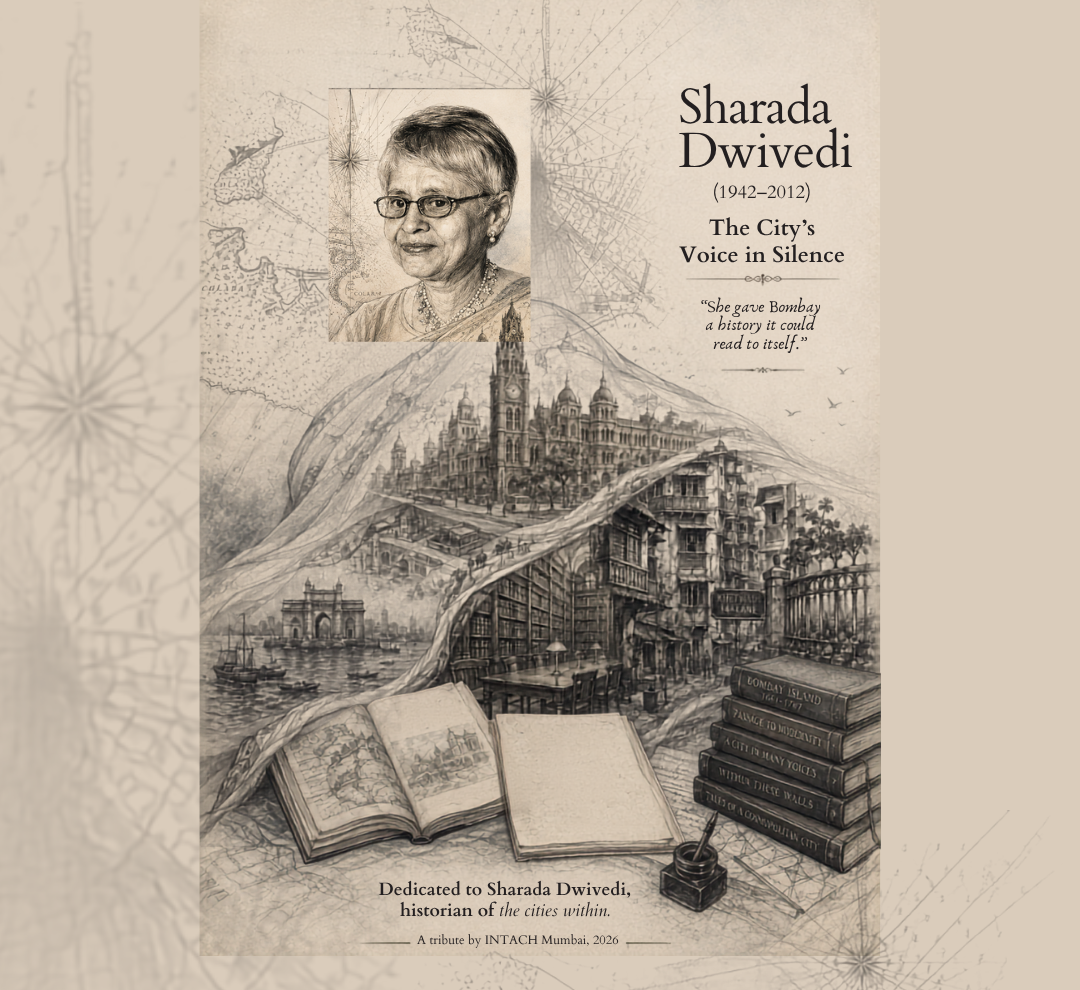
Sharada Dwivedi preserved enough for us to inherit. Whether we continue that work is no longer her question. It is ours. Every generation chooses what it carries into the future. Cities change, skylines rise, neighbourhoods evolve. The measure of progress is not whether we build something new, but whether we remember what made the old worth saving.
The city never stopped changing. Nor should it.
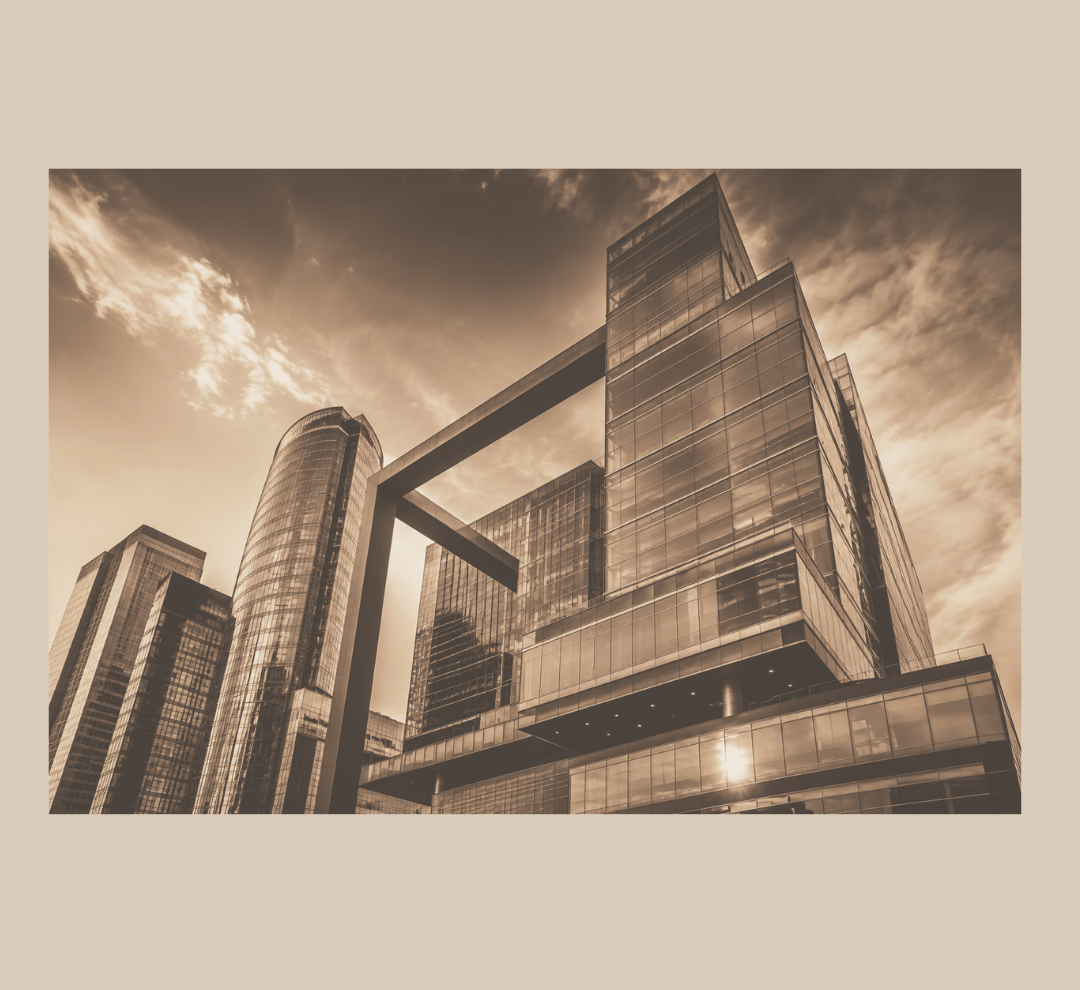
Glass replaces stone. Steel reaches where timber once stood. Every generation leaves its own skyline behind. Progress is not the enemy of heritage. Forgetfulness is. A city becomes truly modern not when it builds higher, but when every new tower understands the ground beneath it. Sharada Dwivedi reminded us that the future is strongest when it rises from memory rather than replacing it.
Curator’s Note
"Bombay was never simply a place. It was an idea. A city where many histories could live together without losing themselves. That is the Bombay Sharada Dwivedi spent her life recording, and the Bombay she hoped future generations would continue to discover. Urbs Prima in Indis."
— JC (Jagdish Chawla)
Engage
Reflections
What readers carried with them.
A quiet record of what this story left behind. Editors occasionally feature a selection here as a Curator’s Note.
Reading the guestbook…
Reflection Reward
Thoughtful reflections may be recognised with 5 Discovery Points at the curator’s discretion.
Time-bound
Reflection rewards may be offered during selected editorial campaigns. Dates will be announced.
Curated & Meaningful
Editors may recognise reflections that add depth, originality or meaningful perspective.
Rules are set by the curator and may change.
All reflections are reviewed by our editorial team. Only selected reflections receive points and may be featured.


Share This Discovery
INK & HOWL — DISCOVERY
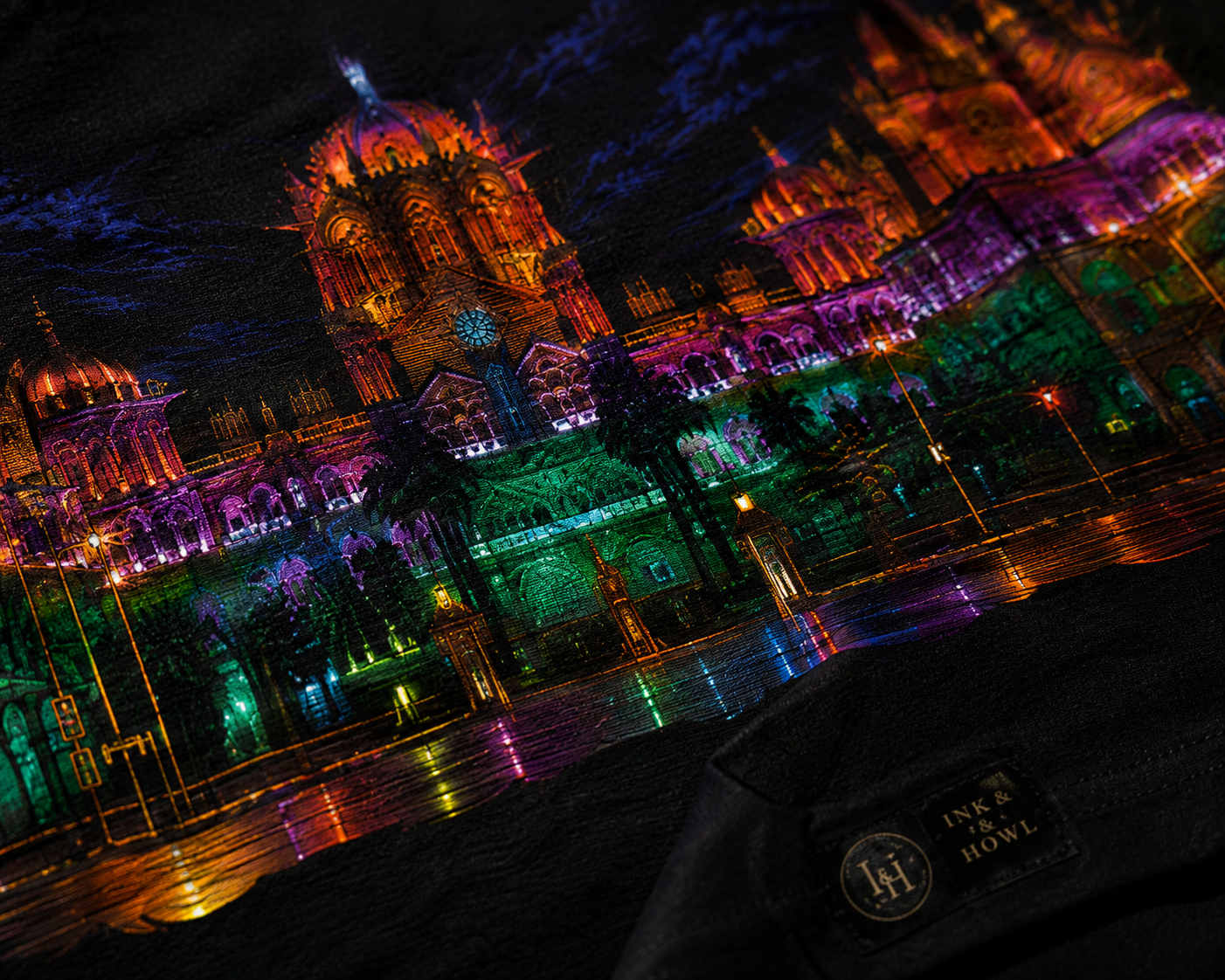
A museum placard. Take it with you.
Know A Creator?
Know a creator we should meet?
Ink & Howl documents emerging makers, artists, designers and thinkers.
Nominate someone whose work deserves to be discovered.