Issue · Emerging Creator
The Art of Not Looking Away
How Orijit Sen turned Mapusa into a living archive of people, memory and everyday grace.
Orijit Sen · Mapusa, Goa, India · July 2026
Editor’s Note
The fish is the last creature to discover the sea." Perhaps the hardest place to truly see is the one we believe we already know. A fish market. A flower seller. A tailor repairing yesterday. A woman who remembers everyone's childhood. Most people would call them ordinary. One artist kept returning until they became unforgettable.
The artist is Orijit Sen.
Most artists introduce themselves by talking about their work.
Orijit Sen begins somewhere else.
He begins with a market.
Not because he is looking for subjects.
Because he is looking for neighbours.
For more than four decades he has returned to places like this, not to document them before they disappear, but to understand how they continue to live. A mural, a comic, a sketchbook or a conversation are simply different ways of returning what the place has already given him.
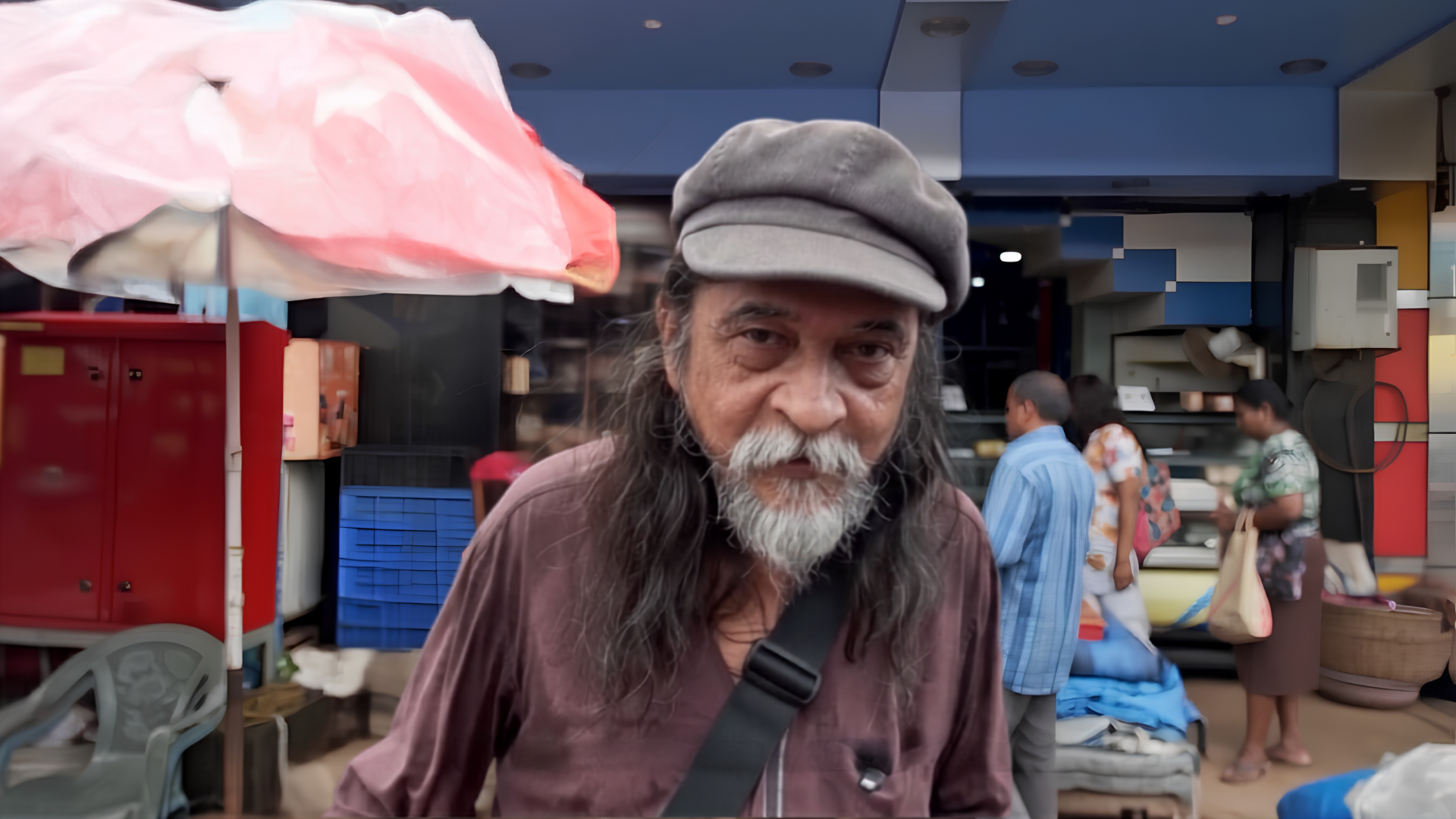
Only later do we realise that the portrait in front of us is not standing in Mapusa.
He is standing inside one of his drawings.
Caption
Orijit Sen doesn't search for extraordinary stories. He stays with ordinary people until they reveal the extraordinary. Mapusa Market, Goa, 2026.
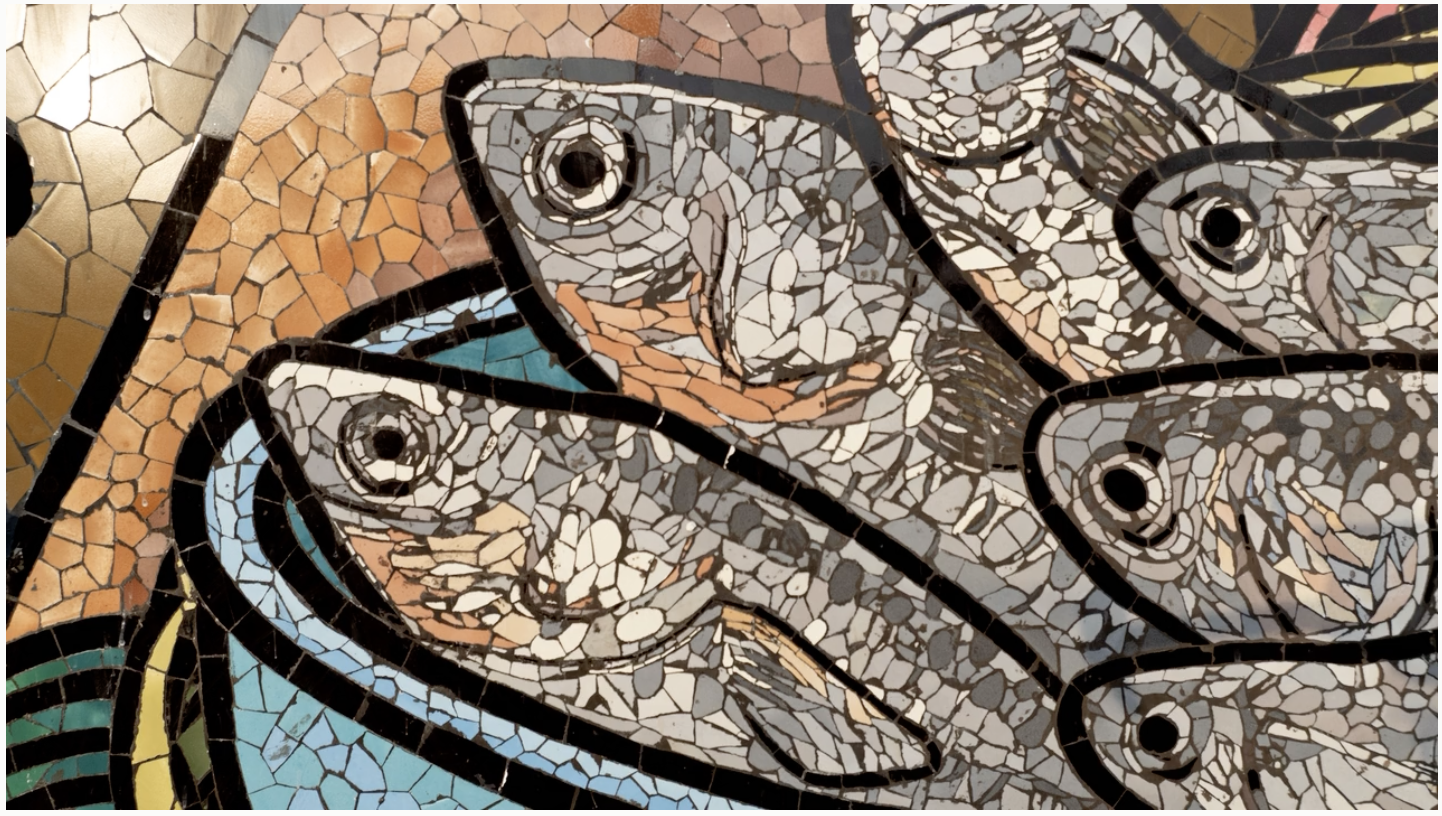
Every Fish Knows the Water.
Except the One That Lives In It.
The Market Speaks
We stopped noticing him years ago.
At first he was the man with the sketchbook.
Then he became the man who listened.
Now he is simply Orijit.
He comes without hurry. He stays without agenda. Tea arrives before he asks. Stories arrive before he sketches.
Somewhere between the fish market, the flower sellers and the grocery stores, he stopped drawing Mapusa.
Only then did Mapusa begin to draw him back.
She Was Never Famous
She never appeared in history books.
She never held public office.
No statue was built in her honour.
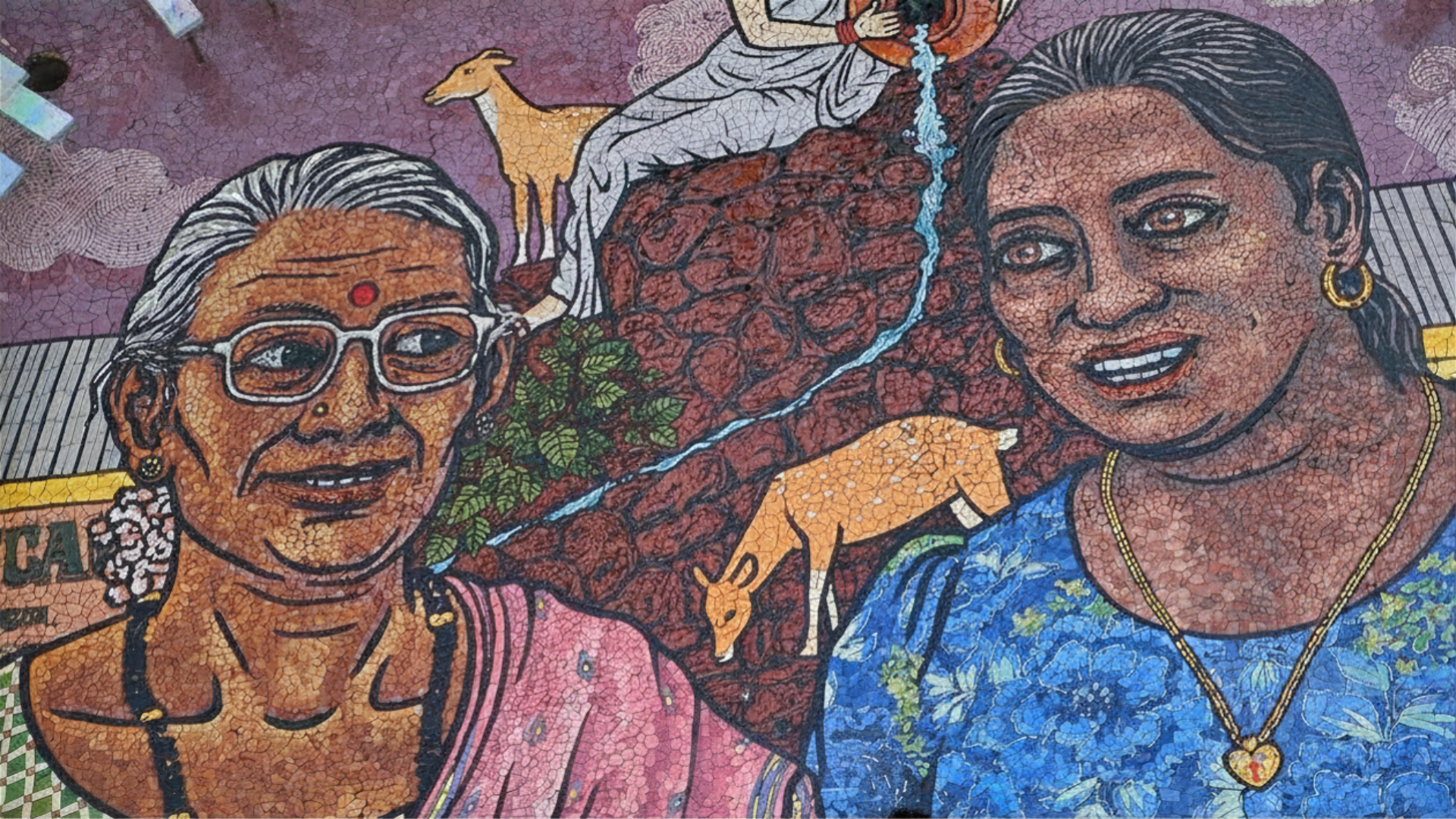
Yet generations of Mapusa knew her face.
That is enough.
Orijit does not reserve walls for heroes.
He gives them back to neighbours.
His murals remind us that every town is held together not only by its monuments, but by people whose names rarely leave the streets they belong to.
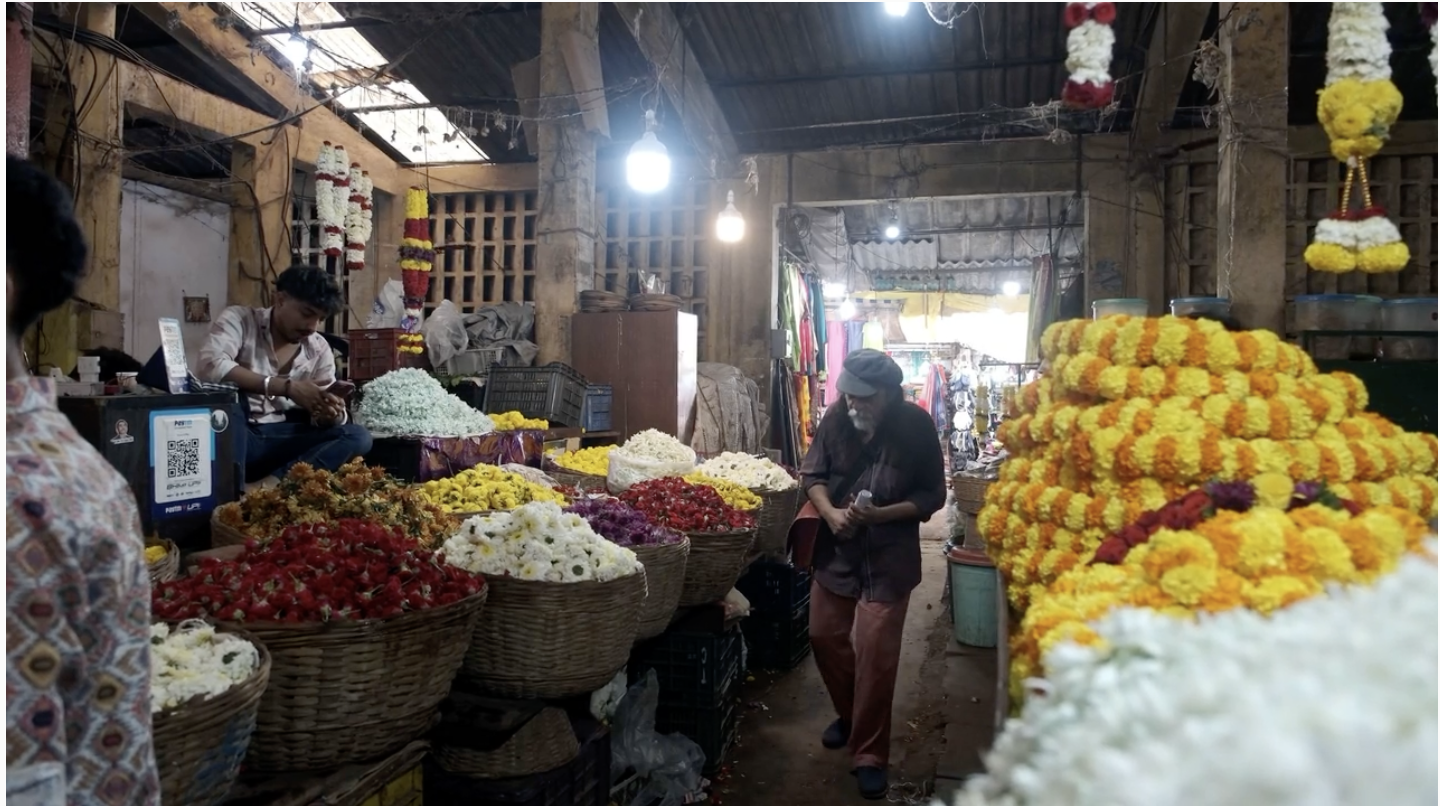
He Walks Before He Draws
Most people arrive at a market looking for something to buy.
Orijit arrives looking for something to understand.
There is no rush.
He circles the same lanes, returns to the same stalls, listens to conversations that seem too ordinary to remember.
Only later do those fragments become a mural.
His greatest medium isn't ceramic or ink.
It is time.
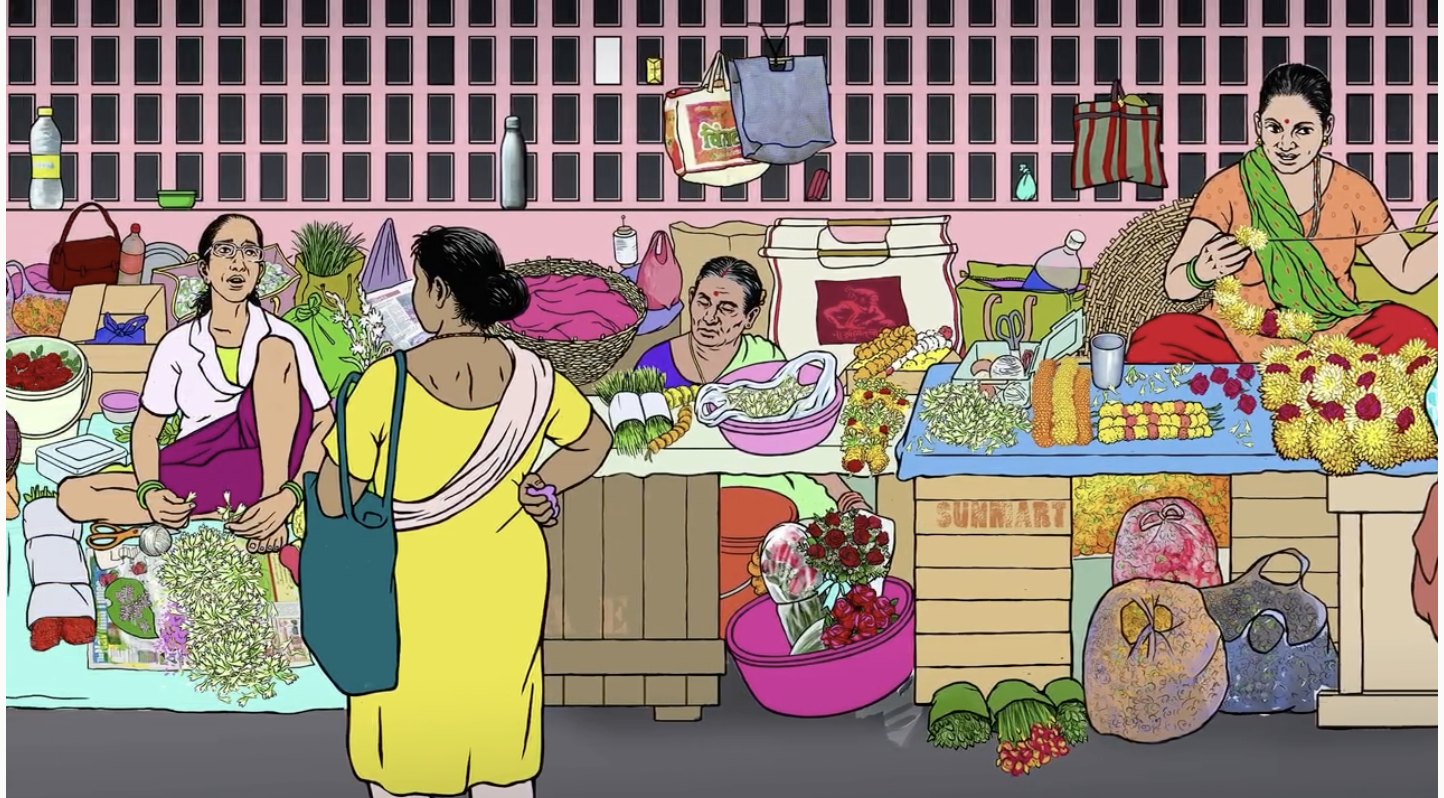
When Observation Becomes Memory
Nothing here has been invented.
The flower seller still sits in the same corner.
The bakery still opens before sunrise.
The conversations still drift between shopfronts.
But after passing through Orijit's hand, they become something else.
Not illustration.
A public memory that the town can return to long after today's voices have faded.
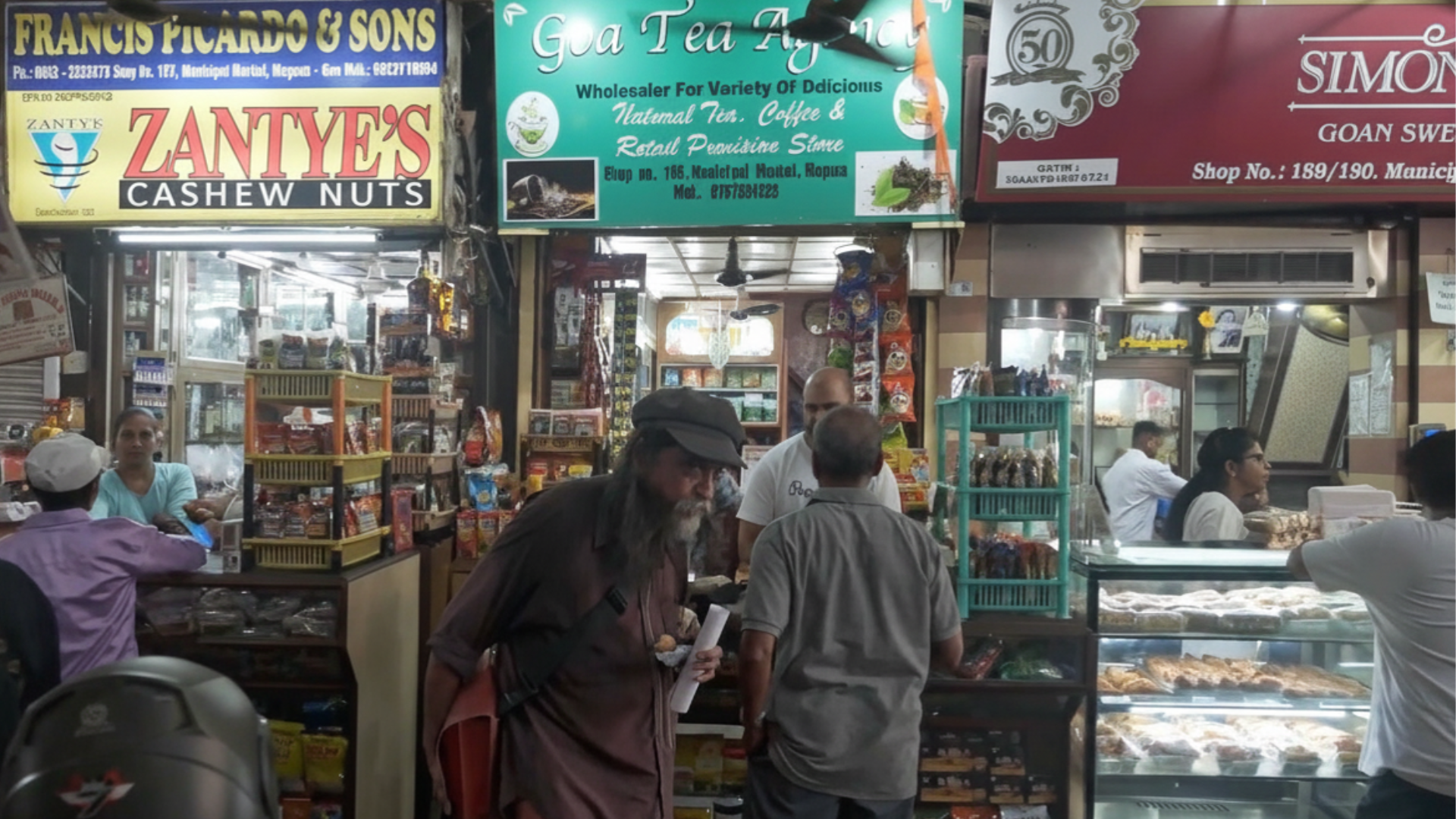
A Shop Becomes Memory
Every town has a place that quietly outlives generations.
A bakery.
A tea stall.
A grocery store where people come as much for conversation as for bread.
Most of us pass these places without looking twice.
Orijit returns until they begin to reveal themselves.
The signboard.
The weathered walls.
The familiar faces.
The doorway worn smooth by decades of footsteps.
Nothing has been romanticised.
Nothing has been invented.
The ordinary has simply been given the permanence it always deserved.
Curator’s Note
Great artists leave behind remarkable works. The rare ones leave behind a different way of seeing.
After walking through Orijit Sen's Mapusa, you begin to suspect that your own neighbourhood is quietly waiting for someone to notice it with the same patience.
Perhaps every town already contains its masterpiece. It simply needs someone willing to look long enough.
— Orijit Sen
Engage
Reflections
What readers carried with them.
A quiet record of what this story left behind. Editors occasionally feature a selection here as a Curator’s Note.
Reading the guestbook…
Reflection Reward
Thoughtful reflections may be recognised with 5 Discovery Points at the curator’s discretion.
Time-bound
Reflection rewards may be offered during selected editorial campaigns. Dates will be announced.
Curated & Meaningful
Editors may recognise reflections that add depth, originality or meaningful perspective.
Rules are set by the curator and may change.
All reflections are reviewed by our editorial team. Only selected reflections receive points and may be featured.


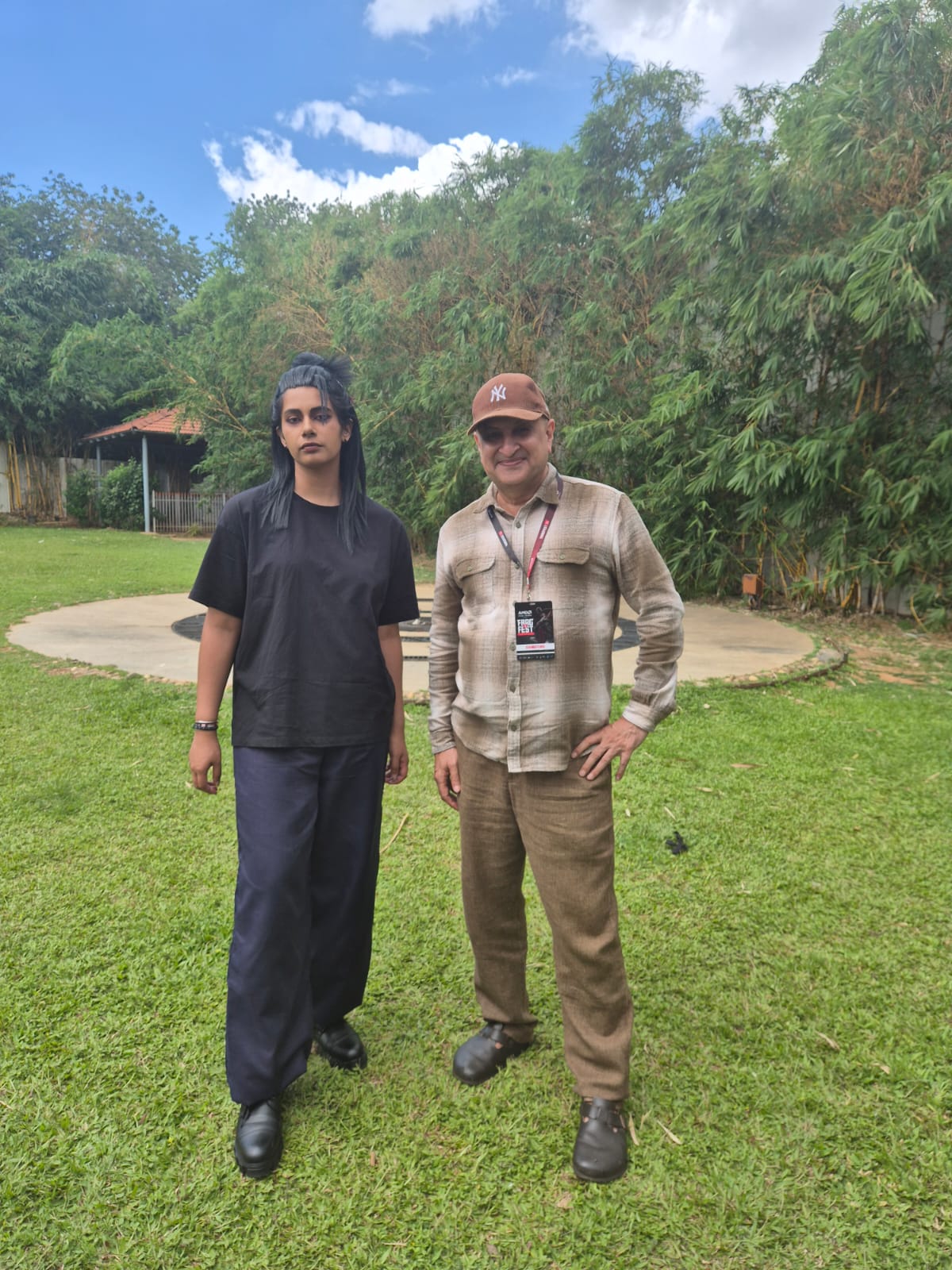
Share This Discovery
INK & HOWL — DISCOVERY
A museum placard. Take it with you.
Know A Creator?
Know a creator we should meet?
Ink & Howl documents emerging makers, artists, designers and thinkers.
Nominate someone whose work deserves to be discovered.